Pages

Saturday, March 30, 2013

Visiting Chennai & Mahabalipuram


Visiting Chennai & Mahabalipuram


The Nandi's at Shore Temple in Mahabalipuram
I had visited the destination in 2007, but had just put in a cryptic little blog for Sulekha, as they were the starting days for me of posting blogs. However, I have not shifted the blog to this site and accordingly, have penned a fresh travel blog. The occasion was the annual convocation being organized by the office was working for at that particular point of time and we had to visit the destination to tie up the ends and finally had to open a camp office in Chennai for a week at the time of the Convocation in February, 2007. After conclusion of the Convocation and having wound up the work, I availed a days leave to explore Mahabalipuram also. 
Ripe Palm fruits
Chennai is an unusually hot place and even in month of February, we were able to get ripe Palm fruits being sold by the road side when we went visiting Mahabalipuram. Madras was one of the first outposts of British East India Company founded in 1639, when the British East India Company (represented by Francis Day and Andrew Cogan and aided by a local translator Beri Thimappa) was granted land to build a trading settlement by the local Telugu ruler (Nayak) of the suburb of Vandavasi, Damerla Venkatapathy Naidu on his father's name Damerla Chennappa Naidu. The document of the land grant is dated 22 August 1639, and hence Madras celebrates its birthday on 22 August each year as Madras day. Madras is derived from Madraspatnam, a name given to the area when the British negotiated settling there with Damerla Venkatapathy Nayakudu. The British built Fort St. George (today the legislative and administrative seat of the state). Fort St George was completed on St George's day in 1640 (23 April) and hence was named after the patron saint. George Town then developed becoming the modern city of Madras, absorbing several nearby boroughs. Thomas, one of the twelve apostles of Jesus Christ, is associated with Chennai. In 1996, the Tamilnadu government renamed Madras to Chennai providing the reason that 'Chennai' was the city's traditional name while Madras was one derived during colonial rule. 
Marina Beach in Chennai
Covelong Beach - on way to Mahabalipuram
Being situated on the coastline of India on the Indian Ocean side, there are quite a few beaches around Chennai, the most famous amongst these beaches are – i) Marina Beach, which is a 12 km long and offers excellent opportunities for walks and has a very wide sandy foreshore. Its width is up to 300 m (985 ft). The Marina of Madras is the second longest urban beach in the world. The South Beach Road runs past the Madras University, the Senate House, the Chepauk Palace; ii) Edward Elliot's beach, is spread along the coast down south from Marina. This beach is comparatively quieter and it is located near Besant Nagar. At the end of this beach are the Velankanni church and the Ashtalakshmi temple; iii) Breezy Beach is located in the quiet neighborhood of Valmiki Nagar (Thiruvanmiyur) in Chennai. It is smaller and less popular than the Elliot's beach; and iv) Covelong as it was known earlier is a small fishing village located 40 km (25 mi) from Chennai on the way to Mahabalipuram. Now it is a luxury beach resort. There was a fort built by the Nawab of Carnatic, Saadat Ali. It was here that the French General Labourdonnais landed his troops in 1746. Later it was taken by Robert Clive in 1752 and destroyed. The Beach is separated from the mainland by the canal running from Chennai to Mahabalipuram. I had the opportunity to visit the first named and last named beaches due to paucity of time. 
The panoramic view of Ratha temples in Mahabalipuram
Mahabalipuram is situated 60 Kms. south of Chennai and easily accessible by road throughout the year. Chennai in turn is accessible both by Air & Rail/Road from across India. The best advised visit window is between December to February, as one has to trek a vast stretchs on foot to explore the entire Temple complex. Mahabalipuram is a 7th century port city named after Pallava king Mamalla. It was built between the 7th & 9th Centrury AD and comprise of various temple complexes built in Dravidian style of architecture and reflect distictive influence of Buddhist elements of rock cut sculptures & design - It has been declared as a UNESCO Heritage site. The temples comprise of three main categories - Cave Temple, Rathas (sculpted out of monolithic natural stone formations) and sculpted relief’s on rock faces. 
The Mandapams in Mahabalipuram
The ancient Mamallapuram, as Mahabalipuram was formerly known, was flourishing port town of the Pallava rulers of south India who chiseled in stone a fabulous "open-air museum" of sculpture under the vault of a burning sky. Most of the temples and rock carvings of this place were built during the reigns of Narsinha Varman I (AD 630-668) and Narsinha Varman II (AD 700-728). Though the initial kings of Pallava dynasty were followers of Jainism, the conversion of Mahendra Varman (AD 600-630) to Shaivism led most of the monuments to be related with Shiva or Vishnu. 

Places of Interest  -

The Five Rathas - The five Rathas were fashioned like the wooden chariots drawn during those times and include the Dharmaraja, the Bhima, the Arjuna, the Draupadi and the Sahadeva. The Five Rathas, about 200 m south of the main hill, were fashioned out of a smaller hill sloping down from the south. From the largest part was made the biggest of the five rathas, the Dharmaraja. Then followed onwards north, in the descending order of height, the Bhima, the Arjuna and the Draupadi. A little to the west of Draupadi there was a comparatively large rock and out of it the Sahadeva Ratha was made. Immediately in front of the Draupadi again two smaller rocks were sculptured into an elephant and a lion. Behind the Draupadi and the Arjuna, which stand on a common base, there is a Nandi.
The pinnacle of Dharmaraja Rath in Mahabalipuram
The Draupadi Rath in Mahabalipuram
Closeup of the elephant behind Draupadi Rath
Nandi Rath behind Arjuna Rath in Mahabalipuram
The Bhima Rath in Mahabalipuram
Mandapas - The main hill at Mamallapuram is dotted with pillared halls carved into the rock face. These mandapas, with their graceful columns and intricate figure sculptures bear witness to the artistry of the Pallavan rock cutter. The ten pavilions at Mamallapuram, of which two are unfinished, were designed as shrine, with a sanctum and on outer hall. The shallow porticoes are adorned with exquisite sculptures of gods, goddesses and mythological figures. The Ganesh mandapa is an active shrine even today, with the idol of the elephant-god being revered by the faithful, fourteen centuries after it was first consecrated. Beyond the circular rock called Krishna's Butterball is the Varaha mandapa dedicated to the two avatars of Vishnu as Varaha the boar and Vamana the dwarf. The pillars of this pavilion are perhaps the earliest to display a motif that became the signature of southern architecture-the lion pilaster, where a heraldic lion support ornamental pillar. The Mahishasura mardini mandapa has the goddess Durga in bas relief, slaying a buffalo-headed demon, and the Vishnu Sayana Mandapa shows Lord Vishnu lying under the protective hood of the seven-headed serpent Adishesha. Of the other mandapas, the Panch Pandava mandapa, that is unfinished, has a more elaborate facade. Its pillars are adorned with rearing lions springing from the capital, and the shrine is the only one surrounded by a passage which allows passage around it's circumference.
Mahisasur Mardini relief in Mahabalipuram

The reclining Vishnu relief in Mahabalipuram
Arjuna's Penance - This skillfully carved rock is the largest bas - relief sculpture in the world. It gets its name from the figure of an ascetic who is believed to be Arjuna, the hero of Mahabharata, doing penance to obtain a boon from Lord Siva. However, there are others who think that the figure is actually Bhagiratha who entreated Siva to let the river Ganges flow over the earth.
The Arjuna's penance in Mahabalipuram
Arjuna's penance - flow of Ganga relief in Mahabalipuram
Shore Temple - Facing the sea and designed to catch the first rays of the rising golden sun, the Shore temple is perched on top of a rocky outcrop. This shrine is dedicated to both Lord Shiva and Lord Vishnu. The temple has interconnected cisterns through which the sea can be let in to transform the temple into a water shrine. But, in recent times, a stone wall as been added to protect the shrine from the rising seas and further erosion. 
Panoramic view of the Shore temple in Mahabalipuram
Here is a video for the destination - 

Saturday, March 2, 2013

Ranikhet, ‘The Meadow of the Queen’ revisited


Ranikhet, ‘The Meadow of the Queen’ revisited


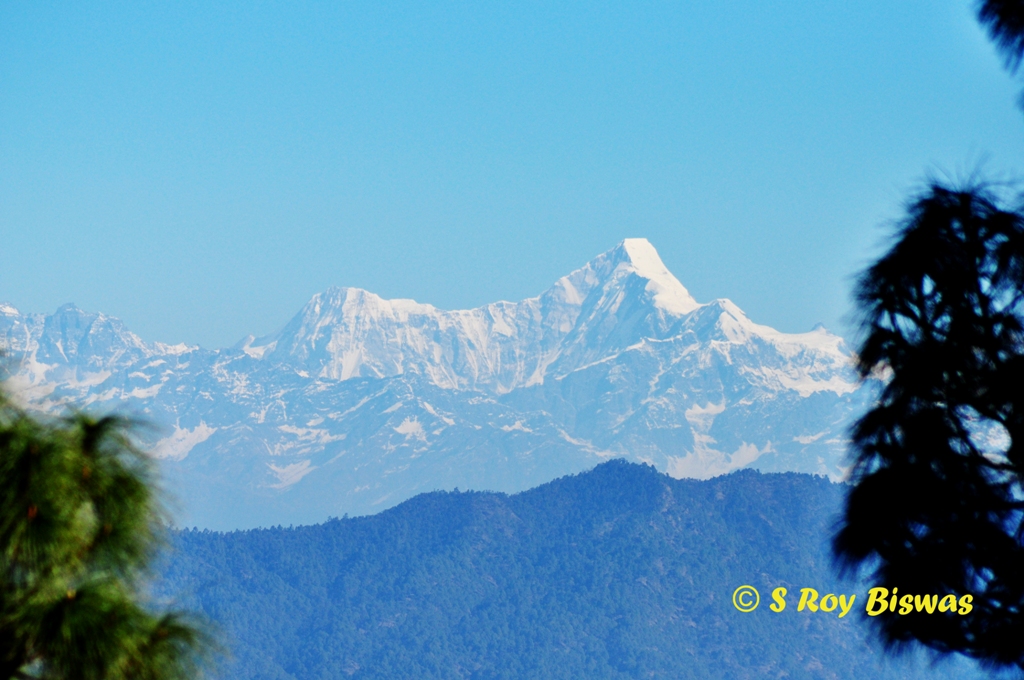
View of Nanda Devi range from Ranikhet


A nature lover's paradise, Ranikhet offers wonderful views of the Western Himalayan ranges.  Ranikhet also presents a stunning view of the reverend Nanda Devi. The scented mountain breeze, fresh and pure, the singing birds, the panoramic view of Himalayas accompanied with the sight, sound and smell, leaves the onlooker spell bound & mesmerized.  Ranikhet is situated in the northern part of the state of Uttaranchal, in the northern region of India. It is situated in the Kumaon hills and is located at an altitude of 1829 m above sea level.  Ranikhet is about 59 kms. from Nainital and about 50 kms. from Almora.  Ranikhet hills offer the tourists a panoramic view of the mighty Himalayan peaks.  The environs of Ranikhet are sylvan, peaceful and attractive. Ranikhet is a cantonment town and is known for its ancient temples. An unusual name, a quaint legend and the sheer beauty of its environs make this Kumaon hill station a wonderful holiday resort.   According to the popular belief this place had won the heart of Rani Padmini, queen of Raja Sudhardev. She chose this scenic place to be her adobe and since then it has come to be known as Ranikhet, whose literal translation means ‘Queens Field/Meadows’.

View of the Ranikhet township

View of Chilyanaula from Ranikhet

Ranikhet, is known for its pristine beauty. The hill station has been a tourist’s haunt for those who want to spend a vacation in lap of nature, far from the maddening crowd of cities. The British troops selected it as their cantonment in 1869 and it also became a summer resort of the British officers.  The cantonment is spread across two ridges, the first, called the Ranikhet ridge, is situated at an elevation of 5,983 ft (1,824 m) and the second, the Chaubattia ridge, is at an elevation of 6,942 ft (2,116 m).  On the opposite spur of this ridge is situated that township of Chilyanaula.  There are a number of tourist attractions in Ranikhet that tourists can visit, both in Ranikhet and outside.

Close up of Nanda Devi from Ranikhet

View of Trishul from Ranikhet

 Some of the major tourist spots within the township are as -
Chaubatia Gardens: It is situated 10kms. from Ranikhet, within the precincts of the military establishments and entry is restricted and one has to make appropriate entry before visiting the spot.  It is renowned for apple orchards. Apart from fruit orchard, one can also walk through a quaint forest trail, assisted by a guide for Rs.100/- and in case both garden and forest trail the rates are Rs.200/- for the guides.   One can also buy fresh juices and honey from Chaubatia Gardens. Picturesque views of the snow capped peaks of the mighty Himalayan range can be seen from Chaubatia Gardens.

View of Himalayan peaks from Chaubatia gardens

Extreme close up of Nanda Devi ranges from Chaubatia gardens

View of Hathi Ghoda peaks from Chaubatia gardens

View of the Panchachuli peaks from Chaubatia gardens

 Jhula (Jhoola) Devi temple

Front facade of Jhoola Devi temple

Jhula Devi temple is an ancient 8th century temple located in a secluded and serene environment near Ranikhet. The main deity of this temple is Goddess Durga and it is believed that Jhula Devi blesses the devotees for fulfilling their wishes. As per the local folklore, the people of the valley were threatened by the tigers & leopards of the region and on consecration of this temple, they & their livestock were spared from the menace.  The spectacular feature of this temple is the majestic cluster of beautifully made bells. The clangs of these bells are heard very long distance. The temple surroundings are beautiful and panoramic view of the distant mountains and peaks is enchanting scenery from here. Many devotees throng to this temple to offer their prayers. A temple dedicated to Lord Ram located nearby is an added attraction.

The presiding deity of Jhula Devi temple

 9-hole golf course is one of the prime attractions of Ranikhet. It is second largest golf course in India. The green meadow of the golf course at such high altitude is simply awesome. Besides, the golf club also offers membership plans for outsiders as well, despite being a military run establishment.

Panoramic view of the golf course in Ranikhet

Bhulla tal is a man made dam about 3 Kms. downhill trek from Chaubatia/Jhoola Devi temple site, but I did not visit it as I was not much impressed with the small lake of same name in Lansdowne.  This lake is man-made and source of water supply to the cantonment.  On way to Majhkhali is the Kali temple stated to be about 5000 years old, but the same being on a hill top, as we were totally drained out after visiting Dunagiri temple and having mounted 400 stairs, we had skipped this destination too.  The sunrise/sunset points either in the Sadar Market area or just below the Kumaon Regimental Centre roads are also worth a visit because of the unparalleled view of the Himalayan ranges. There are other military museums in the township, but I was not much interested in the same and thus, skipped visiting them.

Destinations around Ranikhet

Majhkhali

View of the Himalayan ranges from Majhkhali

is an enchanting destination for its imposing natural beauty and  is located on the Ranikhet - Almora road.  This destination is known for its awesome and tempting celestial view of the Himalayan ranges. The great view of inspiring majestic Sonya peaks of the Himalayan ranges is an unforgettable experience for any visitor. This place is abundantly blessed with the nature’s gifts comprising of a undulating hilly terrains, calm valleys, cool climate and captivating surroundings. It is a quiet place to spend the weekends and evenings.
Tarikhet
Tarikhet is located at a distance of 8 Kms. from Ranikhet is well known for its Gandhi Kuti, and the temple of Golu Devta is venerated in the Kumaon region. Gandhiji spent some time here in 1920’s and was enchanted by this place and is now famous for the Gandhi Kuti and the temple of Golu Devta, on the main road itself.
Binsar Mahadev

The facade of Binsar Mahadev temple - Swarg Ashram

A fox suddenly appeared from the Binsar forest reserve

It is located at a distance of 19 Kms. from from Ranikhet, on the way to Ramnagar amidst dense Pine and Deodar forests. The Shiva Temples of Binsar Mahadev are a unique place for Yoga and spiritual meditation in solitude. Located at an altitude of 2480 mtrs, Binsar Mahadev is an important temple of the region. It is also important for its architectural significance as well. The temple consists idols of Ganesh, Har Gauri and Maheshmardini. The idol of Maheshmardini is engraved with texts in 'Nagiri lipi' (an ancient form of scripture), which indicates the link of temple back to ninth century. The temple was built by King Pithu in memory of his father Bindu is also called Bindeshwar temple. An important fair is held here every year on the occasion of Baikunth chaturdashi in the month of June.
Here are the video links for the destinations -
(1) Ranikhet -
(2)Majhkhali -
(3) Binsar Mahadev -

Saturday, February 2, 2013

Visiting Dunagiri & Dwarhat


Visiting Dunagiri & Dwarhat

Panoramic view of the Dwarhat township

Farming by the Gagas River 

       The next day was earmarked for visiting Dwarhat and Dunagiri temples and accordingly, we started off at around 10.30 A.M. from Chilyanaula in a local TATA Sumo hired from its owner and driver, Sh. Manohar Kumar (Mobile No.08006664473), whom I found to be a quiet and decent person.  Dwarahat is situated in Almora district of Uttarakhand, 37 kms from Ranikhet and 41 Kms. from Chilyanaula, however, the road conditions are very bad at certain stretches.  Dwarhat is popular for its group of 55 ancient temples.  It is quite a small township placed at the centre of the road from Ranikhet and Garsian, at the intersection of Ranikhet - Kausani road and Almora – Badrinath road.  The township rests of the banks of the Gagas River that emanates from the holy Dunagiri Mountain.  As the name suggests, Dwarahat means way of Heaven where Dwara means ‘way’ and Hat means ‘Heaven’.  The Katyuri and Chand dynasties glorified the region by constructing some fine temples - now renowned throughout the country. Though largely a Shaivite region, the presiding deity, Nanda Devi, is amongst the most exalted in Kumaon. 

Temple ruins in Dwarhat


The Ratandeo group of temples - Dwarhat

The Mritunjay group of temples

Sitla mata temple - Dwarhat


         At first sight, Dwarahat appears to be like any other nondescript little sleepy mountain township one has seen. The gradually rolling slopes are covered with Cedar and Pine trees and the township is almost on flat grounds at certain spots. All is quiet in the cold, crisp air, but for the occasional screeching of truck brakes in the distance, as you approach the township.  Just before you enter the main township area you are greeted by the enormous spread of pink colored buildings, belonging to the Government Engineering College, Dwarhat.  In the centre of the town, roller-coaster roads snake up and down around a crowded market, at the centre of which, is a small town centre, wherefrom the roads lead towards the local Post Office and Police Station et al.  Explore a little distance away from the bustle, up a concrete trail, past the backyards of houses, and one will see something quite different.  Hidden amongst the village houses, both old and new, clusters of ancient temples with exquisite carved friezes dating back to between the 8th and 11th centuries, takes one’s breathe away. Some of them have collapsed, whereas in the others, the giant carved stone blocks threaten to roll to the ground. Others have towering temple tops/shikhars frequented solely by animals of flying kind. Although these temples have been declared as protected monuments by the ASI, they are all but abandoned and appreciated solely by an occasional crazy traveler like me.  There are 55 ancient temples that can be divided into eight distinct groups like the Ratandeo group, Mritunjay group, Badrinath group etc. These ancient temples were constructed mainly by the Katyuri Kings and its architecture resembles the Gurjari School of Art.  Dwarahat also has several temples devoted to the Shakti cult also. Near the bus stand are the ruins of the ancient Syaldeh Pokhar (Syaldeh pond). An ancient temple of Shitala Devi is located here which dates to 1257 CE. A very famous folk-fair of Kumaon called “Syaldeh Bikhoti” fair is held annually near Syaldeh Pokhar at the beginning of new solar year (Vaisakhi or Baisakhi). There are also temples of “Kotkangra Devi” and Kalika Devi in the near vicinity.  It is said that these temples were destroyed by the Rohillas (Ruhelas), who had attacked this part of the Kumaon and since these temples were abandoned and have fallen to ruins.

The reverend 'Maa Dunagiri temple'


      Maa Dunagiri temple located at a distance of 14 kms from Dwarahat. A temple dedicated to Vaishno Devi is adorned by the locales in Dunagiri. Many myths bear testimony to this fact, according to which when Hanuman was carrying the Sanjivani buti (literal meaning – life providing herb), a piece fell here and since then a lot of beneficial & medicinal herbs are found here, this place is known as Dunagiri since times immemorial.   Dunagiri commands an imposing view of the Himalayan Ranges on one side and the Dwarhat township, on banks of Gagas River on the other side. Dunagiri is flooded by tourists and devotees during Chait (April) and Ashwin (September/October) months of Navratras.  There is a huge mela (fair) and congregation of thousands of devotees, thronging the temple precincts during the Navratris.  During the festivities, each night of the Navratri is dedicated to the nine different forms of Goddess Durga. They are Maa Shailputri, Maa Brahmachaarin, Maa Chandraghanta, Maa Kushmaanda, Skand Maa, Maa Kaatyayini, Maa Kaalratri, Maa Chaamunda, and Mata Sidhidaarti.  To reach the Durga temple or Paban Maharaj Ashram from the highway, one has to climb 400 steps on the top of a hill.

Up on top of the 400 stairs - on way to Dunagiri temple


       Dunagiri mountain is said to have been the group of mountains brought by Pavandavas of Mahabharata fame during their Agayat vas (days of banishment from their Kingdom).   Most temples and holy places in India, accrue higher respect & divinity as per the age of the shrine, the older they are, the more reverend are they.   For instance the 3000 year old temple of Kanyakumari may be deemed more potent than a 300 year old temple.  At Dunagiri, it is not in years, centuries nor even millennia that the antiquity of this place is calculated in, but rather in terms of Yugas! A place where mysticism abounds, fascinating legends and numerous mystic stories are intimately connected to Dunagiri.  From the ancient times, places such Drongiri (Dunagiri), Badrinath, Kedarnath have been known as Soul of Gods (Devatma) Himalaya, since these places are also the meditation spots (asanpeeth and sadhna-sthali) of many realized souls.  Dunagiri or Drongiri is counted amongst one of the seven Kulparvats of the Purans. As this destination is replete with association of Ascetics and Saints over eons, just by visiting such a reverend destination, one imbues some of the blessings and spiritual vibrations of the “realized souls”.

Saints live and meditate here in the hallowed environs of Dunagiri


      Dunagiri hill is the shrine or seat of Sri Sri Vaishnavi Mata Bhagvati Jagdamba.  Sri Sri Vaishnavi Mata is the presiding form of Divine Mother among the other forms worshiped in the Valley.  Dunagiri finds mention in the holy scripture of Manaskhand of Skandpuran.   Mother Goddess at Dunagiri is described as Mahamaya Harpriya. The distinctive qualities of Durga at Dunagiri as shul-hasta, mahishasur-ghatini, sinh-vahini are described in the Manaskhand.  Dunagiri Devi is also referred to as Vahyamati which identifies it with its Vedic roots. In Vedic times Durga was known to be a form of Agni.  Till today, there are only two Vaishnavi Shaktipeeths (energy centers) in India.   One is in Jammu, the famed Vaishno Devi Shrine near Katra and the other is the Vaishnavi Devi temple at Dunagiri.  Among all the Shakti temples of Kumaon, Dunagiri is counted amid the most ancient ‘Sidh Shaktipeeth’.  It is counted amongst the primary ‘ugra’ (intense) ‘peeths’, i.e., amongst the primary intense centers of energy, although it is not associated with the 51 Shakti Peethas of the Shiva tandava scriptures and thus, is also known as the Gupt (Hidden) Shakti Peeth. Photographing the actual deity is strictly forbidden and hence no photographs of the same.

Entry gate to the temple of Dunagiri


      Of the eighteen Upanishads that the holy scriptures of Hindu religion, the Shwetashwet upanishad is believed to have been inspired & composed solely at Dunagiri. Fourth chapter of Shwetashwet upanishad ponders over divinity in context of duality of Purush and Prakriti, taking inspiration from Dunagiri’s twin natural peaks (one can see these twin rock pieces inside Dunagiri temple). Hence Manaskhand of Skandpuran bestows Dunagiri with the title of Brahm-parvat (Divine Mountain).

The temple of Ma Dunagiri


     As the place is in existence since times immemorial, it has had several incarnations of Goddesses over the Yugas, starting from the Satya Yuga wherein Bhairavi, the consort of Bhairav or Lord Shiva himself, turns into Vaishnavi Mata. Bhairavi, the Divine Mother of Tantra at the last stage, turns into Vaishnavi Mata while awarding liberation to her devotees, because only in the form of Vaishnavi does she award liberation.  During the Treta Yuga,  Dunagiri finds mention in the story of Ramayana as being the hill where Sanjeevani booti was obtained by Lord Hanuman to revive an unconscious Lakshman in battle of Lanka. Hanuman is often depicted flying through the sky carrying part of a hill. This hill is Dunagiri. Lord Ram’s younger brother, Bharat, also meditated at a hill overlooking Dunagiri. This hilll, still named after him, is now known as Bhatkot (originally Bharat-kot).  During the Dwapara Yuga, Sages are said to have come to the hills of Dunagiri to meditate in solitude. These sages are mentioned in the epic Mahābhārata.  Sage Bharatmuni renounced worldly life and came to Dunagiri to meditate. Dronacharya, the royal guru to Pandavas and Kauravas meditated at Dunagiri (Dunagiri or Drongiri is named after Dronacharya).  Dronacharya’s brother, Garg muni, one of the greatest sages of the Puranic times, also meditated at Dunagiri.  The River Gagas that originates at Dunagiri is named after Garga muni. Dronacharya and Garga were sons of Rishi Bharadwaja, one of the Saptarishis (Seven Great Sages) of this epoch. Sage Sukhdev muni (son of sage Ved Vyasa, the author of Mahabharata) meditated at Dunagiri.  Shakuntala and Dushyant’s son,  king Bharat after whom India is named as “Bharatvarsh” was born at Dunagiri.   Pandava’s too spent time here during their period of anonymous exile and their abode, now known as “Pandukholi”, which is further 5 Kms. ahead on road to Almora, but was not visited by me.

Mesmerizing views from Dunagiri temple

       In more recent times, Dunagiri was the spot chosen by Mahavatar Babaji (who is conjured as manifestation in form of Haidakhan wale Babaji – as referred to in my previous blog) to give Kriya Yoga initiation to Lahiri Mahashaya, hence Dunagiri in known as the birthplace of Kriya Yoga.  A golden palace was materialized here, as mentioned in the book Autobiography of a Yogi by Yogananda Paramhansa.  It is also at Dunagiri that Mahavatar Babaji is said to have given initiation to Haidakhan baba in Manas Yog, to Neem Karoli baba in Mantra yoga, and to Sombari baba in Pashupat yoga. Other saints who meditated at Dunagiri are: Harnarayan Swami, Ram Baba, Mahatama Laxminarayan Das, Nantin Baba, Mahant Balwant Giri, MK Bhattacharya, Swami Satyaeshwarnananda Giri.

The Gagas River that emanates from Dunagiri


      Although I have not been able to visit the reverend shrine of Mata Vaishno Devi in Jammu, this chance pilgrimage to such a holy place has in all probability absolved me of my earthly sins.  We were in time to partake the langar (community lunch) at the temple precincts, the scenic & religious images of this famed temple shall remain ever etched in my memory.  Thus, I dedicate this travel-blog to many an unread like me, who had no idea about the spiritual relevance of this destination and may this humble contribution from me enlighten many a unread souls like me, Jai Maa Vaishno Devi.

Here is a video of the destination