Pages

Sunday, January 24, 2021

Beating the lockdown blues – a visit to my village Badankhet

ॐ

Beating the lockdown blues – a visit to my village Badankhet

(A Photo blog)

Panoramic view of Himalayan ranges seen from village Badankhet

As my daughter is to appear in the Board examination this year, there were no big plans for the year 2020 as such, regarding our summer vacations or winter vacations.  But still everyone looks forward for a short trips, as a break from the mundane and in order to replenish our souls and body.  I had last visited my home in Badankhet in Ranikhet Tehsil in October, 2019 for undertaking cleaning and maintenance works.  Thereafter, although we had made a very brief winter trip, but had gone to our home only for a day in December, 2019.  In the year 2020 also, we had planned to take a few days break in summers of 2020 at our home in Badankhet village.  But the COVID-19 Pandemic that resulted in total lockdown in the country being imposed from 24th March, 2020 onwards, resulted in all the plans for the year going haywire.  Everyone was struck in their homes, with children having online classes and tuitions, ladies busy in collecting essentials through online portals and as the offices and businesses had started opening up gradually by June, but inter-state movement remained barred.


A male Khaleej pheasant in Badankhet village

A female Khaleej pheasant in Badankhet village

A close up of the Moon against an azure blue sky and pine tree top in foreground

Close-up of the perennial mountain spring in village Badankhet

In order to maintain my blog, I had stitched together a few blogs using my old journeys, albeit being presented in a different manner.  It was only in November, 2020 that we finally decided to take a break and head for our home in Badankhet village for a week.  Accordingly, after procuring the mandatory e-pass from the Uttarakhand Government portal, we commenced with our journey from Delhi in the first week of November, 2020.  The journey was a lot different this year, as it was sans any stoppage at any restaurant or eatery, which was one of the favorite parts of our usual journeys.  The road was almost free with very few vehicles, due to the lockdown and we went past the first bottle neck i.e. Gaziabad in a jiffy, as during this period of almost a year, a bye-pass over the entire crowded stretch had been constructed, which resulted in a smooth and hassle free ride.  Having covered a sizeable distance because of the good road conditions coupled with scant vehicles, after turning towards Moradabad for onwards journey to Ramnagar, we had our first stop at around 10.00 A.M for Breakfast.   Wife had prepared stuffed sandwiches and hot piping coffee in thermo-flasks, we had our belly full and thereafter we headed towards Ramnagar.  After having crossed Ramnagar, Corbett and Mohan region, we took a short break and as some stuffed parathas had been prepared for partaking in lunch and I had also purchased a Butane stove and cans for heating up the food, just before start of the journey, but everyone declined to skip lunch as we were still full.  We had some chips and biscuits only during this short stop over.  The journey upwards on towards the hills gradually begins after Mohan and finally the steep gradient begins from Kumheria onwards.  I and the driver took another break only for tea en-route and did not even stop at Bhatraujkhan for purchase of groceries etc., as my wife had carried everything from Delhi.  Thus, we reached Badankhet in record time and were home by 3.15 P.M.


Wild Himalayan Pear tree flowers in Badankhet village (https://en.wikipedia.org/wiki/Pyrus_pashia )

Wild Mexican Levander flowers in Badankhet village

A rose flower - early morning shot - in village Badankhet

A bouquet of Chrysanthemums in my garden  in village Badankhet
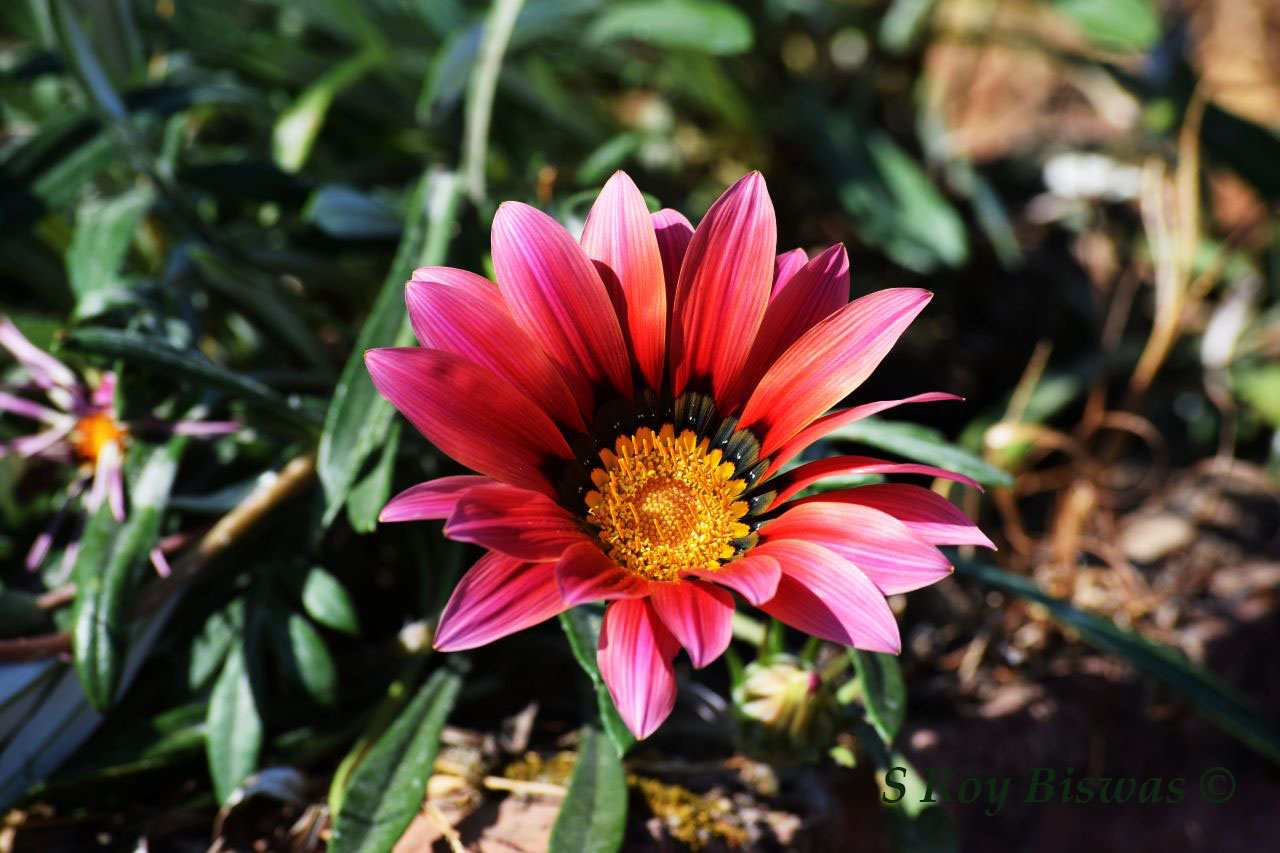
Close up of Gazania flower growing in my garden in  village Badankhet

Some acorns growing on an Oak tree  in village Badankhet

As my caretaker had got the verandah and garage cleaned up, we just opened up the flat and within a few minutes had got the rooms swept, as there is hardly any dust etc. and quickly settled in.  We had the parathas heated and served with piping hot tea and thus, had a late lunch cum tea.  It was quite cold as the evening started setting in, so as already instructed, the caretaker had arranged for some fire wood to light up a fire and accordingly, he lit up two wood stoves and after the smoke stopped emanating, the wood coal alongwith the stove was moved inside and this heated up the rooms and it became quite comfortable inside the flat.  We had an early dinner that day, as the driver also was tired, having driven more than 350 Kms., almost at a stretch and we all retired for the night.  We woke up late the next morning, all refreshed and rejuvenated, away from the hustle & bustle of city life and its pollution, but had a vacation that was coupled with chirping birds, fresh air and refreshing view of the Himalyan peaks, although this year they were not as clearly visible due to dust, since there had been no rains for past quite some times.

View of Jakholi village as seen from village Badankhet

View of Mori village as seen from village Badankhet

View of another typical Kumaoni village as seen from  village Badankhet
As we drive back towards Delhi - some view of the hills
As we drive back towards Delhi - typical Kumaoni style collection of grass for use in winters by woman folk of the villages
As we drive back towards Delhi - we are about to enter Corbett region - just ahead of Kumheria 

The famous north Indian festival celebrated by the ladies i.e. Karva Chauth was also scheduled during this break taken by us and the fiery reddish moon rise on that day was a sight to behold, I have attempted to capture the essence, but the camera does not do the justice, as against what the eyes perceive and see.  The usual birds and flora was all around including some flowers blooming in my plot and I have incorporated the photographs to introduce the readers to the vivid scenes and scenery that defines my village home in Badankhet, Gram Panchayat Timila in Tarikhet Block in Ranikhet Tehsil and I leave you with visuals of the lifeline of the village i.e. the perennial mountain spring and the flora and fauna around.  I had kept this blog pending, so that I could start with my first blog in January, 2021 and hope to continue blogging thereafter, as time & happenings around take place.  Wish you all a fruitful and refreshing year ahead. 

The moon with reddish hue over Ranikhet hills on 'Karva Chauth' day 

Here is the link to videos of the journey and my village mountain spring –


Video of short drive through Corbett forest


Video of mountain spring in village Badankhet

© S Roy Biswas


Monday, December 21, 2020

Nondescript destinations of Kumaon – Bhimal

ॐ

Nondescript destinations of Kumaon – Bhimal

View of Bhimtal lake and township during sunset

Bhimtal is the biggest lake in the Nainital district of Uttarakhand.  This lake has been in existence since ancient times, being a gateway to the plains below for people moving in from present day Pithoragarh and Tibet etc. for trade during historic times.  It was discovered by the British only in 1841 and developed to some extent by them.  Folklore of the region say that the Pandavas had visited the place and Draupadi was thirsty, so Bhima struck the ground and water flowed forth in this place that formed a lake and since then the water continues of replenish the lake perennially, thus, the lake is named after him as Bhimtal.  An ancient Shiva temple, known as ‘Bhimeshwara Mahadev’ temple is also located in Bhimtal, which as per folklore is touted to have been built by Bhima and has been standing there since centuries.  The present temple was renovated in the 17th Century A.D by Kumaon King Baz Bahadur of Chand dynasty.

Bird's eye view of Bhimtal - all buildings cramping up the place

Panoramic view of Bhimtal lake
                 
As the clouds envelope Bhimtal lake during monsoon

Another view of Bhimtal lake during monsoon
        Geographically, Bhimtal is located about 22 Kms. from Nainital and about 20 Kms. from the last railhead Kathgodam.  It is perched at an altitude of 1370 meters and enjoys a salubrious climate the year round.   Bhimtal is situated at the base of Karkotaka mountain, named after the famed mythological Snake.  At present Bhimtal has become a hub of housing activity all across this mountain, with several individual and apartments coming up in the region.  The tourists get to enjoy boat ride in the lake and also angling facility.  During the recent past the adventure of para gliding has also been added in the list of activities that the tourists can enjoy.  The STD Code for Bhimtal is – 05942 and the Pin Code of Bhimtal is – 263136.

 Here is a short video of the destination –

© S Roy Biswas


Friday, November 20, 2020

Nondescript destination of Kumaon – Bhowali

ॐ

Nondescript destination of Kumaon – Bhowali

Bhowali main junction - the road from top side leads to Nainital

Bhowali can be called the nerve centre of Kumaon, as in order to proceed towards a majority of destinations in Kumaon, one has to pass through this nondescript little village town, which is also known as the fruit market of the region.  Situated at a distance of about 34 kms. from the railhead of Kathgodam, one can approach Bhowali either from Nainital side through Jeolikote or from Bhimtal side, which is a wee bit shorter road.  If one approaches from the Nainital side, one will have to cross this destination even for visiting the Champawat side.  However, if one is traversing from Bhimtal side, the road towards Champawat bi-furcates mid-way.  For visiting Mukteshwar, Almora or Ranikhet and beyond, one has to cross this nondescript township and hence I call it the nerve centre of Kumaon, specifically as the all arterial roads lead through this destination.

Panoramic view of Bhowali village

 Perched at an altitude of about 1650 meters, the township enjoys a salubrious climate all year round.  Being an old market, it has been the outlet for sale of stone fruits like plum, pear, apple et al that grow around it in Nainital, Ramgarh etc.  and available during summers and early monsoon.  During the fall season, other fruits like walnuts, hazelnuts, chestnuts etc. make an appearance in the market and is a main attraction for the tourists passing by, who enjoy these mountain fruits, as per the season and this at times creates a traffic jam in the region, as not enough space is available for parking of the vehicles.  Apart from fruits, I personally while traversing through this market, especially on my way back to Delhi, source fresh vegetables, be it cabbages, peas, cauliflowers (during summers also) or various kinds of other local green leafy vegetables (known as ‘saag’ in Hindi), as I find them to be more tasty and fresh, than from what we get here in Delhi. 

One of the hotels in Bhowali - on road towards Almora

During monsoons this hotel is full of Begonia flowers (tuberos variety) - a close up of the same

Bhowali township is almost as old as Nainital, as because of its salubrious climes it housed a Sanatorium for Tuberculosis patients that was built way back in 1912.  The place is named after a small village that is placed about  3 Kms. from the main road that runs from just below the Sanatorium gate and goes by the same name i.e. Bhowali.  Bhowali, apart from the Kumaon Mandal Vikas Nigam managed Tourist Rest House (TRH),  now has quite a few homestays just beyond the municipal limits on way of Mukheshwar and Almora, hence can be easily be used as a base point for day visits to places like – a) The famous Ghora Khal temple dedicated to Golu Devta (a local and reverend God of justice); b)  Ramgarh & Mukteshwar; c) Kainchi Dham (only eight Kms. Away) and on other side d) Bhimtal; e) Sattal etc., many such nondescript little destinations are also placed within the Bhowali Tehsil.   It would be a good idea to stay in such a location, being cheaper but with all amenities during travel.  The STD code for the destination is – 5492 and PIN Code is – 263132.

 Here is a short video of the destination –


 © S Roy Biswas