The view of the entry gate to the Nature awareness center & camping site
A counter set up at the entry gate - colorfully decorated with animated figures
Panoramic view of the camping site in the center
I
have posted several blogs in the past about the various tourist destinations in
Ranikhet, although they too did not contain details of all the
destinations.However, of late Ranikhet
is being developed as an eco-tourism destination and in this series the second
such center to be developed by the Almora Forest Division is the ‘Ranikhet Nature Awareness Center & Camping
site’.This center has been
developed near the famed temple of Binsar Mahadev and this region is a notified
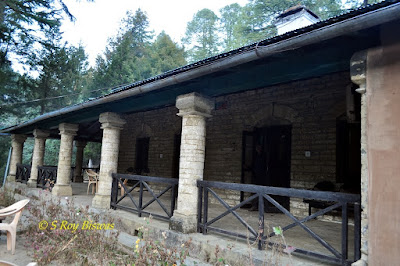
forest area, with a British era ‘forest rest house’ situated in the vicinity
and me alongwith some of my office friends had stayed there way back in
December, 2013 (am sharing a few of those photos to give a visual feel of the
area about ten years back).This center as
has been set up now, was inaugurated by the local MLA Shri Karan Mahra on 12th
August, 2021.
The British era forest guest house in the vicinity of the Nature awareness camp
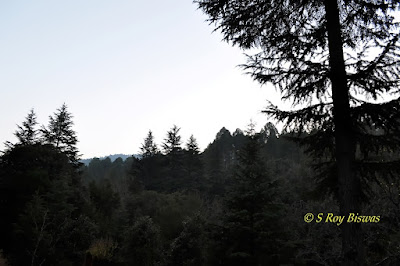
A silhouette of the Binsar forest in early morning
A Verditer flycatcher in the Binsar forest
This
center is situated near village Sauni, which is about 12 Kms. away from
Ranikhet on the Ranikhet-Ramnagar State Highway. On this Highway itself, as one traverses
towards Bhatraujkhan, the road bifurcates from a point called Soni daat (about
1 Kms. from Sauni village) leading towards the famed Binsar Mahadev temple and
other villages beyond like Devlikhet, Chamarkhan etc. and after traversing a
distance of about 600 odd meters, one comes upon the entry gate of the said ‘Ranikhet Nature Awareness Center & Camping
site’. The site has been developed
along a small rivulet flowing through the forest and there are about 09 (Nine)
riverside camps that have been set up with several common toilets placed
alongside for facilitating the visitors during their stay. In order to provide proper security, within
the environs of the forest, this area is properly fenced all around, to protect
it from encroachment by the wild animals.
The place has a big dining space cum restaurant, where the resident
visitors as well as the other daytime visitors can order some food and
drinks. The cost of stay per tent for
two persons is Rs.1500/- per night. The
region boasts of a plethora of birds and for adventure tourism lovers there is
mountain bike trail with cycles being provided (at a nominal cost) to the
visitors alongwith treks within the forest also being organized through trained
guides. A 3D small movie theater with a
seating capacity of about 15 (Fifteen) persons is also operational for the
visitors at a nominal fee. The entire
complex has been tastefully decorated with paintings of birds and animals
painted on the buildings within the complex.
It is a must visit destination for nature lovers (I have placed a copy
of the pamphlet of the complex for contact purpose.) and here is a link to the
inaugural function of the camp - https://ne-np.facebook.com/theproductionpronews/videos/199782995512894/
Nature awareness
center and camping site, Soni village,Ranikhet is on Facebook also (may check out the photos) - https://www.facebook.com/sonitourism/
A short visit
to Rajaji National Park – Chilla range
A Golden backed woodpecker inside the TRH Chilla
We were struck up and could not
undertake any short trips due to certain difficulties in my home front. However, we got a short window of about a few
days and I had to plan for a destination that could be reached overnight or
across a day and after visiting the destination for a day, return back the next
day. After much research, I zeroed in on
Chilla range of Rajaji National Park. It
is situated in Haridwar District of Uttarakhand and is about 220 odd kilometres from Delhi and
further lies about 8 Kms. from the Hardwar Railway Station. The distance was doable within about five
hours and in case of any exigency I could rush back at home quickly. Being a reserve forest, it was an ideal
location for us, to be away from the hustle and bustle of city life for some
time. For the trip to fructify, the
foremost requirement was to identify a suitable place to stay at the location
and also to find out if any accommodation was still available. There are only two good boarding &
lodging arrangement within the precincts as well as periphery of the Park
vicinity i.e. the Forest Rest House and the other one is the Tourist Rest House
run by Garhwal Mandal Vikas Nigam Ltd. (GMVN for short). By luck I could source a family room in the
GMVN run facility, as the Forest Rest house was fully booked.
A map showing location of Rajaji National Park, Chilla (sourced from net)
The outer gate of TRH, Chilla
Inside wide-angle view of TRH, Chilla
View of water canal formed by the barrage behind TRH, Chilla
A Cormorant looking for fish in the canal behind TRH, Chilla
We
started in the morning at around 7.30 A.M, which was quite late by our
standards, considering the fact that whenever I visit my summer pad in
Ranikhet, we usually start at around 6.00 A.M sharp.But as the distance was about more than a 100
Kms. less and coupled with the fact that the present drive did not require any
hill driving, we were quite comfortably placed.The road from Delhi to Meerut was excellent, being newly constructed, by
using the bye-pass we were able to make quick progress upto Meerut.Thereafter, the road was again congested and
the journey, time consuming.Around
10.00 A.M we reached Muzzafar Nagar and had our first break for B’fast at
Bikanerwala, which is very conveniently placed, right on the highway, with
ample parking space.The restaurant
offers great food and there is a wide variety to choose from and the public
utilities are well maintained and is a most suitable spot to drop in for a
short break.Having, had our fill we
proceeded further and reached Haridwar after negotiating another bottleneck at
Roorkee.Having reached Haridwar, we
overshot the cut which led to the destination and instead manoeuvred our car
towards the barrage entry and were rightly guided back to take the cut from
road that leads towards Chandi Devi temple and we finally reached Chilla at
around 3.00 P.M.Thereafter, having made
ourselves comfortable in our rooms, we ordered some snacks and really enjoyed
them, the food per se was quite delicious in the GMVN run Tourist Rest
House.Having had our tea and snacks, it
was time to call up Viru Negi to check out about the next day’s safari booking
for visiting Rajaji National Park.Late
in the evening he turned up in his Jeep and after dropping his guests for the
day, we had tete a’ tete and I sought the afternoon safari for the next
day.During the period that I waited for
Viru Negi ji to make an appearance, I strolled along the canal formed due to
barrage across the Ganga River and could spot quite a few birds around the TRH
complex itself and shot photographs using my camera and am sharing with you all
in my blog.
A Buzzard flying by at the birding spot near Chilla
Some Cormorants flying across in the sky avboe
Bahminy Shelduck in Ganga in the birding spot near Chilla
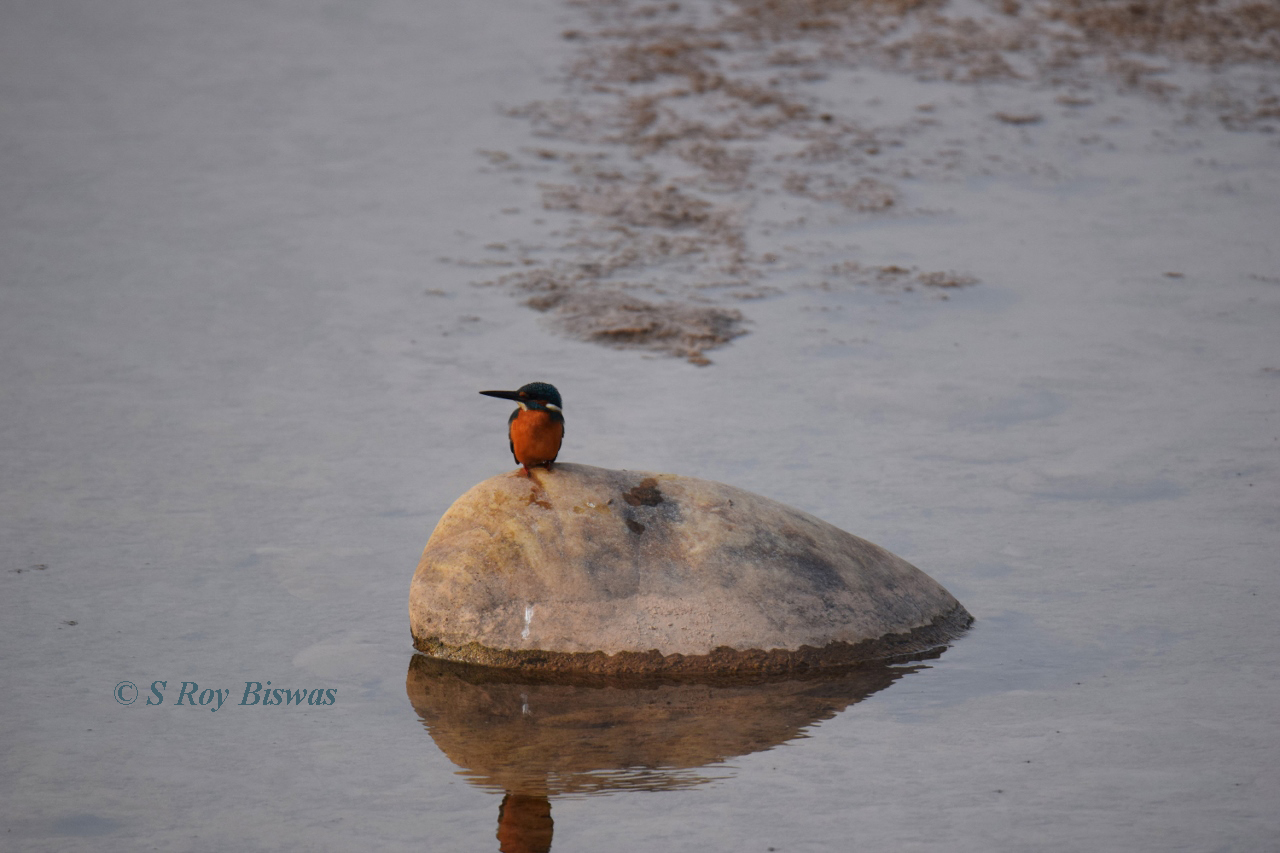
A Common Kingfisher in the birding spot near Chilla
New day morning
while I was strolling with my camera along the side of TRH, another local bird
enthusiast approached me and gave me some information about another birding
spot in the locality and we drove up to the destination and shot a few birds
with my camera, accompanied by my Son and daughter. Thereafter, we returned back to have lunch
around 1.30 P.M and were thereafter, picked up by Viru Negi ji for our
afternoon safari at around 2.30 P.M, since the safari began at 3.00 P.M. The Rajaji National Park is situated along the hills
and foothills of Shiwalik ranges in the Himalayan foothills within the Shivalik
biosphere. Historically speaking, there used to be
three separate wildlife sanctuaries namely – Rajaji Wildlife Sanctuary
established in 1948; Moticur Wildlife Sanctuary established in 1964; and Chilla
Wildlife Sanctuary established in 1977.
In the year 1983 all these three reserves were all combined to create
one body named as the Rajaji National Park and in the year 2015 it received the
status of a Tiger Reserve. It is named
after Sri C Rajagopalachari – the first Governor General of free India. Spread across more than 800 Sq. Km., with
altitude spanning from 330 to 1350 meters, it is a fairly large park that is
adjacent to the holy cities of Hardwar, Rishikesh and Dehradun in Uttarakhand. Chilla Reserve is situated next to the
hydropower plant. So one can see a
branch of Ganga flowing here, with many seasonal rivers merging into it. In fact, the GMVN guest house is located on a
narrow strip of land where one such seasonal stream meets the Ganga.
A Golden backed woodpecker inside Chilla range
Terai like grasslands inside the Chilla range
Huge Sal trees and other trees inside the forest in Chilla range
A Back shouldered Kite inside the Chilla range
A Siberian stonechat inside Chilla range
A male Chital or Spotted deer inside Chilla range
A small portion of the holy River Ganga flows for about 24 km
within the park precincts. Other small seasonal rivers or rivulets join it at
various places within the reserve forest. However, we could only see some dry River beds
across the reserve, through which our jeeps drove through during the
safari. The
area is covered with diverse forest types ranging from semi-evergreen to
deciduous and from mixed broad-leaved to terai like grassland and has been
classified as Indus-Ganges Monsoon Forest type. Lofty strands of Sal dominate
in many parts of this forest range giving it a surreal feeling, as the evenings
set in.
Pug mark of both Elephant and a leopard inside Chilla range
A watch tower inside the Chilla range
A Mountain Hawk Eagle inside the Chilla range
A juvenile Sambar male inside the Chilla range
A Sambar female inside Chilla range
Rajaji
is home to a plethora of avian species, which are found in forested foothills
and in open grassland. The location of
this reserve forest being in a transition zone between temperate western
Himalaya and central Himalaya enhances the species diversity and consequently
the viewing prospects of a large number of birds that inhabit this broad
spectrum. As per the official website, the Rajaji's checklist has about 400
bird species and includes good birds like Greater Scaup, White-naped
Woodpecker, Great Hornbill, Black-bellied Tern, Pallas's Fish Eagle, Northern
Goshawk, Black-necked Stork, Yellow-billed Blue Magpie, Scaly Thrush,
Snowy-browed Flycatcher, Rusty-flanked Tree-creepers, Pale-footed Bush Warbler,
Tytler's Leaf Warbler, Green Avadavat and Reed Bunting. Apart from this, the National park is
best known for is its elephants. I had always heard about herds of elephants
roaming freely in the region that one can come across while driving through the
forest, but it was not to be in our case. In fact, this is the identified North
Western end of Elephant corridor in India. If you travel further North or West
from here, you would not find any wild elephants.
A male Peacock inside Chilla range
A female Red Jungle fowl inside Chilla range
A White breasted Kingfisher inside Chilla range
A Woolly necked Stork inside Chilla range
Sambhar deer - both male & female inside Chilla range
The safari charges are quite
reasonable with a Jeep Safari of two and half hours duration costing around
Rs.3,500/- with guide, but may vary from season to season.As the winters had yet to pass and the
weather was not very clear and being quite cold early in the morning, I
preferred an afternoon safari.The
afternoon safari starts at about 3.00 P.M and ends at about 5.30 P.M and one
can book it in advance or get one at the entry gate itself, if the rush is
less.I, on the other hand, was able to
establish contact with one of the well-known guides operating in the Rajaji
National Park and is quite well acquainted with all the portions of the
park.I had contacted him over phone and
he was courteous enough to arrange for the entire safari for us and his name is
Viru Negi (Mobile No.+91-9917606031).He is a very nice person and anyone interested can contact him directly
on this mobile.The safari itself is
better than that of Corbett in respect of time and distance covered, albeit
there are fewer Tiger sightings in the region.We got to see a lots of deer, birds including Jungle fowls and by the
time as the evening set in, we could hear alarm calls of Langurs and Sambars,
but could not sight any Tiger nor any Elephants to speak of.By the time we were returning back, it had
become literally cold and we were also famished, as the Park authorities do not
allow any packed food items inside the park and rightly so.The photographs shall speak for themselves
about the trip and a short video of the safari inside the park for my viewers –
The Coco Beach - where from the Grande Island trip commences
A video the start of the journey for Grand Island trip
After having enjoyed the trip to Dudhsagar falls, we were back to our
service apartment known as Treebo Zeebo in Arpora by late evening.Being dead tired from the trek and the ride, as
described in my earlier blog, we decided to have dinner at the complex
itself.Although the apartment has a tie
up with some local restaurant, who provides for food on order, we decided to
try the local in house cook known as Anna.We decided the dinner menu based on local Goanese cuisine and the cook
went to the market to personally purchase the ingredients required.My Son who does not partake either fish or
Sea food decided to try out the chicken preparation from the small road side
eatery run by a lady just across the road.To say the least, we were all just swept of our feet’s, by the sheer
taste and freshness of the food served and decided to have dinner at the
complex itself for the remaining days of our stay.After enjoying the hearty dinner, we had a
great night’s sleep, as the Grande Island trip was scheduled for the next day, was
to commence at late morning hours.The
next day, after having had the complimentary B’fast that was included in our
package at the apartment complex, we started for the Grande Island trip at
around 9.00 A.M, by the Tempo traveller that picked us up as the first guests
and later on the others and took us to the jetty at Coco Beach, wherefrom all
the boats ferrying passengers for Grande Island tour set sail.
The small shack just across the apartment in Arpora run by local lady
A plethora of birds near Coco beach
The inlet from Sea that leads to Coco Beach
A Lesser fish Eagle at Coco Beach
A copy of the pamphlet showing various trips organized in Goa
Copy of hind side of the Pamphlet depicting
Grande popularly known as the Grande Island or Bat Island is one of the
most sought after tour destination in Goa that has been especially designed
keeping in view the likes and dislikes of the younger generation. The only way
to reach Ilha Grande is by traversing the Sea on a sailing boat. The package
tour to the Island usually includes activities like snorkelling, scuba diving,
fishing and a scrumptious lunch at the Monkey Beach, where the aroma of the
barbeque fish is mouth-watering.After
the meal, one can also enjoy swimming in the sea.However, the tour no longer ferries
passengers to the Grande Island or Ilha Grande, as the same has been taken over
by the Indian Navy, which has a base there, but a few nautical miles away from
it.There are a plethora of tour
operators offering this package and the cost varies based on the facilities
being offered by the tour operators and I am enclosing one of the pamphlets
that are circulated to visitors.
The lighthouse atop Fort Auguda as seen from boat
The merchant's villa as seen from the boat
The panoramic view of Fort Auguda with the jail as seen from the boat
Another group of tourists on a trip
A Sea Gull in flight
The mechanized boat leaves a trail in the sea water
After a long wait at the Coco Beach, the boat ride commenced at around
11.00 A.M and after about 15 minutes of ride, the crew served some patties, but
as we had already had our B’fast in Hotel itself, we did not partake the
same.Thereafter, cold drinks were
served and also beer to all desirous of having the same, actually the number of
persons having beer outnumbered the cold drink fellas by one is to ten ratio.We spotted many of Sea Gulls following the
boat and we quickly found that they were in look out for some quick snacks and
the boatmen were throwing the patty pieces, which these birds were eagerly
snatching either in air or from the Sea.The other interesting part about this trip is that one gets a different
perspective all together of various landmarks of Goa, from the Sea i.e. Aguada
fort, merchant’s bungalow, central jail and a few beaches and big ships
stationed or moving in the mid sea.
A large Ocean liner docked
View of Monkey Beach from the boat
Just engrossed in the boat ride
Snorkeling in the sea
Other tour groups enjoying the activities
A fast Navy boat traverses across the Grande Island periphery
Video of snorkeling during the trip - shot by Mr.Deepak (tour operator)
Video of Scuba diving shot by professional divers during the trip
Having travelled for a good hour or so in the Sea, we first reached the
Monkey Island, where a few of the crew members de-boarded alongwith the tents
and cooking utensils etc. to arrange for the lunch.Also there being a small toilet complex, the
passengers were also allowed to disembark and use the utilities.After a break of about 15 minutes, we again
boarded the boat and headed towards the Bat Island, where the other activities
like swimming in the Arabian Sea, fishing, Snorkelling, scuba diving etc. takes
place and there were many boats anchored around and tourists therein too were
enjoying the activities.As the
unfettered supply of Beer had started taking its toll on many of the youngsters
and we had a verbal spat with a group of Engineering students who had come in
from Vellore Institute of Technology. This spat occurred, as the camera and
other equipment that were kept on the boat got drenched in sea water, as these
boys started jumping into the Sea from the roof of the boat and the splashed
Sea water, which almost drenched our equipment.As we were more on reserved side viz a viz a Tamilian family that was
enjoying the birthday of one of their family members and guzzling beer in
barrels and also other alcoholic hard drinks, were not within their selves but
at a boisterous high, we were quietly branded by them as the Angry Bird
family.After about two hours fun and
frolic, wherein I too got the Scuba diving and Snorkelling videos shot by the
crew members, we headed back to the Monkey Island.By the time we reached Monkey Island, the
tide had started surging and the crew was finding it difficult to put the
anchor and finally after much effort they could do it and then we had to wade
through waist high water to the island for having lunch.The lunch definitely was scrumptious with
non-vegetarian Goanese cuisine being the main course.Having had lunch and others enjoying a few
more rounds of beer alongwith with hard alcoholic drinks, especially the family
described hereinabove, the return journey commenced and my description of these
persons can be gauged from the video enclosed.
As the tide had begun rising - the crew found it difficult to anchor the boat at Monkey beach
Having lunch at the Monkey beach
The Grande Island trip is designed basically for the youngsters or
persons with happy go lucky attitude, but it is worth every penny spent and the
pictorial depiction and videos would do more justice to the description of the
trip viz a viz the written description of the same.However, the only downside of the trip is
that they offer Dolphin viewing, but that rarely happens, as it only by chance
that Dolphins can be spotted and not always.
Video of the return journey - check out details as indicated in the blog